




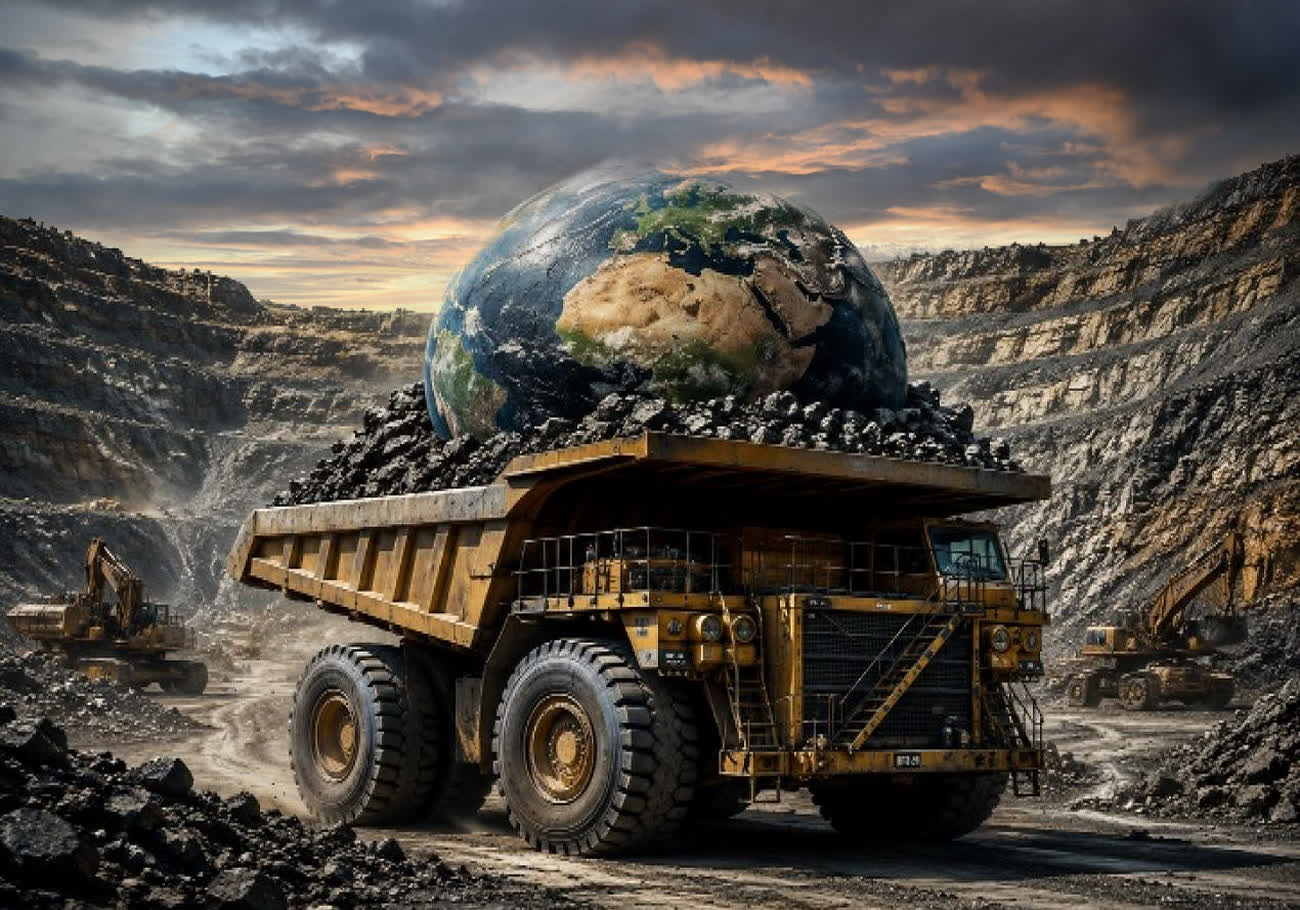
Today, critical minerals and rare earth elements constitute a fundamental component of national economic security and technological sovereignty in all leading countries of the world. They are essential for the production of semiconductors, chips, hard drive magnets, processors, servers, smartphones, and sensors. Global competition in the production and export of “critical minerals” is exceptionally intense.
The largest supplier of “critical minerals” is China. The PRC accounts for 91% of global supplies of highly refined rare earth elements. The scale of production and exports enables China to unilaterally influence global manufacturing of microchips and servers. According to experts, such influence is comparable to OPEC’s leverage in the hydrocarbons market. The foundation of China’s competitive advantage lies in its capital-intensive business model, which includes the full production cycle—from mine to finished products.
The United States seeks to offset China’s hegemony in this segment of the global market and is developing domestic extraction of rare earth elements and gallium through US Critical Materials Corp., while also actively acquiring stakes in major domestic and foreign companies. In early 2026, the U.S. President announced the launch of Project Vault—a project to create a national stockpile of strategic minerals.
EU countries are also attempting to overcome their strategic dependence on China. Thus, in spring 2025, the adopted Critical Raw Materials Act identified 47 projects totaling €22.5 billion. According to this document, by 2030 “at least 10% of strategic raw materials must be extracted within the EU, and no single supplier country may account for more than 65% of each strategic material.” Experts believe that EU demand for rare earth metals will increase sixfold by 2030 and sevenfold by 2050, while demand for lithium is projected to grow on an even larger scale—by 12 and 21 times, respectively.
Russia possesses 28 million tons of explored reserves of “critical minerals” across 18 deposits. However, today our country conducts industrial extraction of less than 2% of the explored volume. The Strategy for the Development of the Mineral Resource Base of the Russian Federation through 2050 points to the “lack of necessary extraction capacities, effective technologies, high processing costs, and the unfavorable geographic location of deposits.” Amid escalating geopolitical tensions, our country aims to reduce its dependence on rare earth metal imports from 75% to 48% and to achieve zero dependence on such “critical minerals” as lithium and niobium.
Thus, it can be stated with regret that Russia is currently losing the race to supply the IT industry with “critical minerals.” The rich experience of the Soviet and Russian geological school, along with the presence of uniquely vast natural reserves, is our competitive advantage—one that we have not yet fully utilized, lagging behind both in the extraction of our own resources and in mastering capital-intensive technologies, as well as in technological cooperation and integration into global supply chains.
Author: Candidate of Economic Sciences, Associate Professor of the Department of World Economy and World Finance at the Financial University under the Government of the Russian Federation Natalia Vladimirovna Sergeeva.


