





Editor-in-Chief of “Capital of the Country”: Gleb Igorevich, you have more than 18 years of practice behind you and thousands of surgeries performed. How does a doctor’s view of plastic surgery and its true purpose change over the years?
Gleb Tumakov: in 18 years in plastic surgery, I have performed more than 8,000 operations. And the more I work, the more I become convinced of a simple thing: good plastic surgery is not about making a person different.
My teacher and friend, the genius of plastic surgery Igor Alexandrovich Vulf, once told me a phrase I still remember to this day: “A good operation is the one no one can see.”
Over the years, I understand more and more precisely how accurately these words reflect the essence of my profession.
I don’t want a woman to look in the mirror after surgery and see someone else. I want her to see herself—the same woman, with her individual features, facial expressions, personality, but fresher, more rested, and more harmonious.
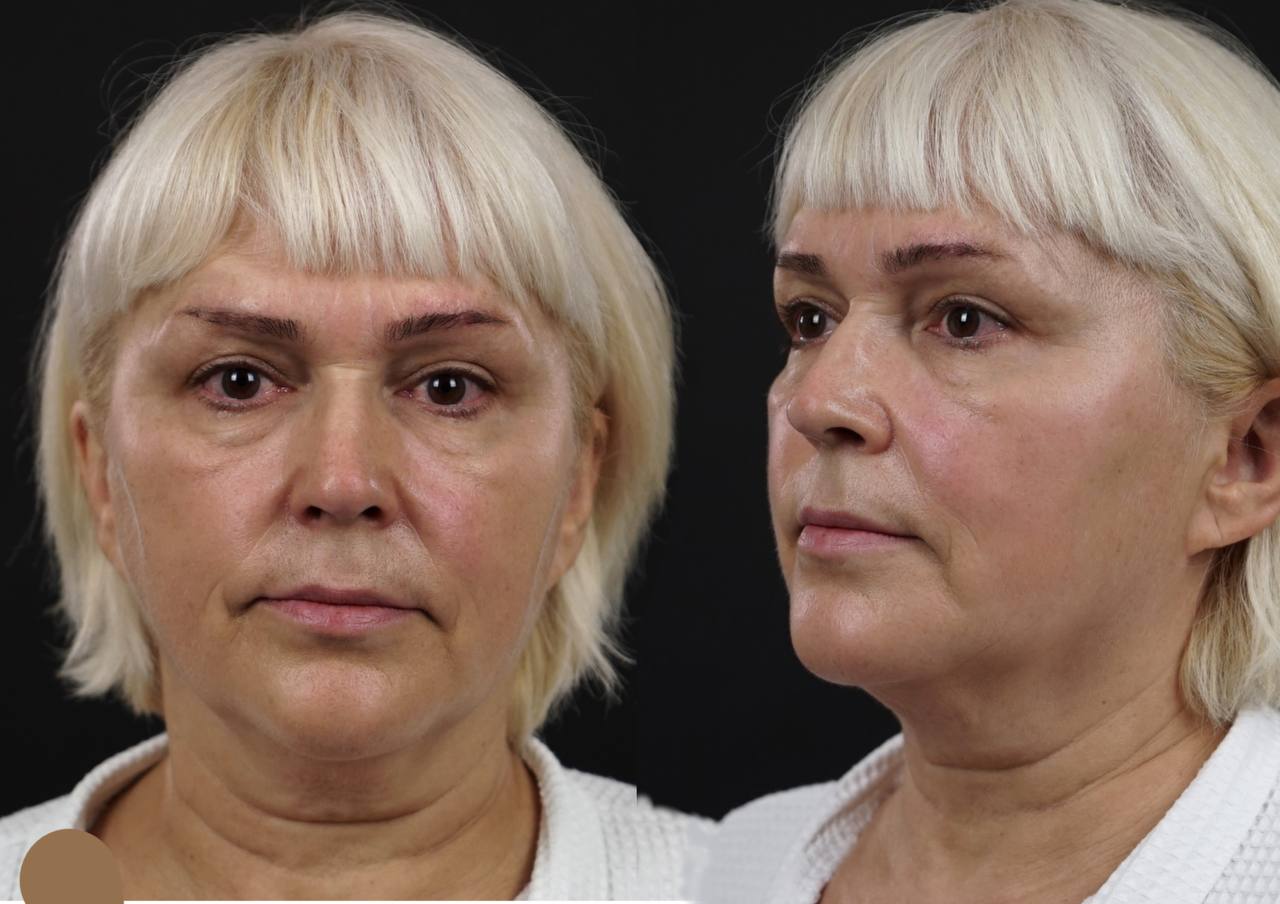
BEFORE / AFTER
— These days, the word “naturalness” is often mentioned as a trend, but everyone puts their own meaning into it. What do ideal harmony and natural asymmetry mean to you personally?
— Naturalness for me is not just a nice word.
There are no perfectly symmetrical faces in nature. Every person has their own features: slight asymmetry, an individual shape of the eyes, lips, chin, and facial structure.
And I don’t consider it my task to correct everything that can technically be corrected.
If a slight asymmetry doesn’t bother a person, why touch it? Sometimes trying to achieve perfect symmetry can make a face look less natural.
That’s why before every operation I ask myself: what truly needs to be changed, and what is important to preserve?
I believe a surgeon must not only be able to operate. He must be able to stop in time.
— What kinds of requests do patients come with?
— I don’t promise the impossible.
At the consultation, I always try to explain honestly to the patient what result we can achieve.
There are things that surgery really can change. There are things that can be improved but cannot be completely removed. And there are features that are better preserved.
It’s important to me that a woman makes a decision with her eyes open—without inflated expectations and without pretty promises. Because for me, a patient’s trust begins precisely with honesty.
— What principles guide you when you assess whether an operation is appropriate? Are there cases when you have to refuse?
— Safety is always more important than the result.
The second foundation of my work is safety.
Plastic surgery is a serious surgical intervention. That’s why it’s not enough for me to understand what result we want to achieve. We need to understand what extent of surgery a particular patient can safely tolerate.
We evaluate test results, overall health, individual characteristics of the body, and discuss the plan with the anesthesiologist.
If I understand that a certain extent of intervention creates an unjustified risk, I will refuse it.
Sometimes telling a patient “no” is much harder than saying “yes.” But I believe this is exactly where a surgeon’s responsibility shows.
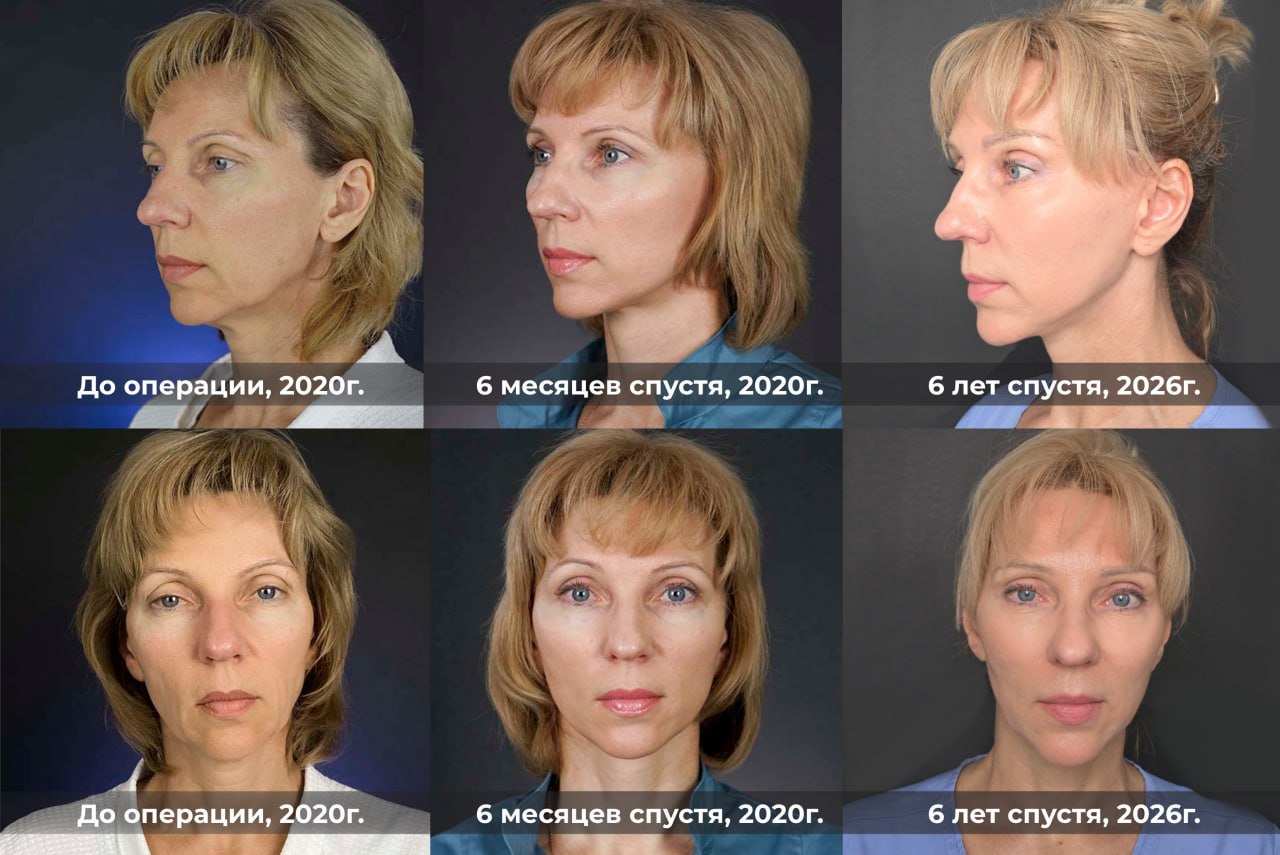
BEFORE / AFTER
— The issue of age is one of the most sensitive in aesthetic medicine. What concept do you use when approaching age-related changes?
— I don’t consider age a flaw.
Over the years of my work, I’ve realized another important thing: for me, there are no unattractive women.
Wrinkles, reduced skin elasticity, changes in facial contours are a natural part of life. It’s not an illness and not something that necessarily must be corrected.
But if a woman is healthy, consciously wants to change something, and wants to enjoy her reflection again—why not help her?
I don’t set myself the task of making a 60-year-old woman look like a 25-year-old. That’s impossible and, most importantly, unnecessary.
What is much closer to me is this: that her appearance corresponds to how a woman feels inside.
So that she wants to be photographed again. Looks at herself in the mirror with pleasure. Goes on dates with her husband. Wears her favorite lipstick. Feels beautiful and desired.
— What, for you, is the highest assessment of craftsmanship? What lets you know your work has been done flawlessly?
— The greatest evaluation of my work is when they come back.
There are special patients—those who return to me again years later. For a surgeon, that’s a very important moment.
Because time shows the true result. You can present a beautiful photo right after surgery, but it’s far more important to see a woman five or ten years later and understand how naturally the result has held up.
When a patient chooses me again after years, for me it is probably one of the strongest forms of trust.
I want my patients to remain themselves. So that years later they look at their photos and don’t think, “How much I changed.”
But think, “How glad I am that I took care of myself back then.”
And probably that’s exactly why my teacher’s phrase still remains a professional guiding principle for me: “A good operation is the one no one can see.”
Because the best result of plastic surgery is not a new face. It’s you—just in harmony with yourself again.
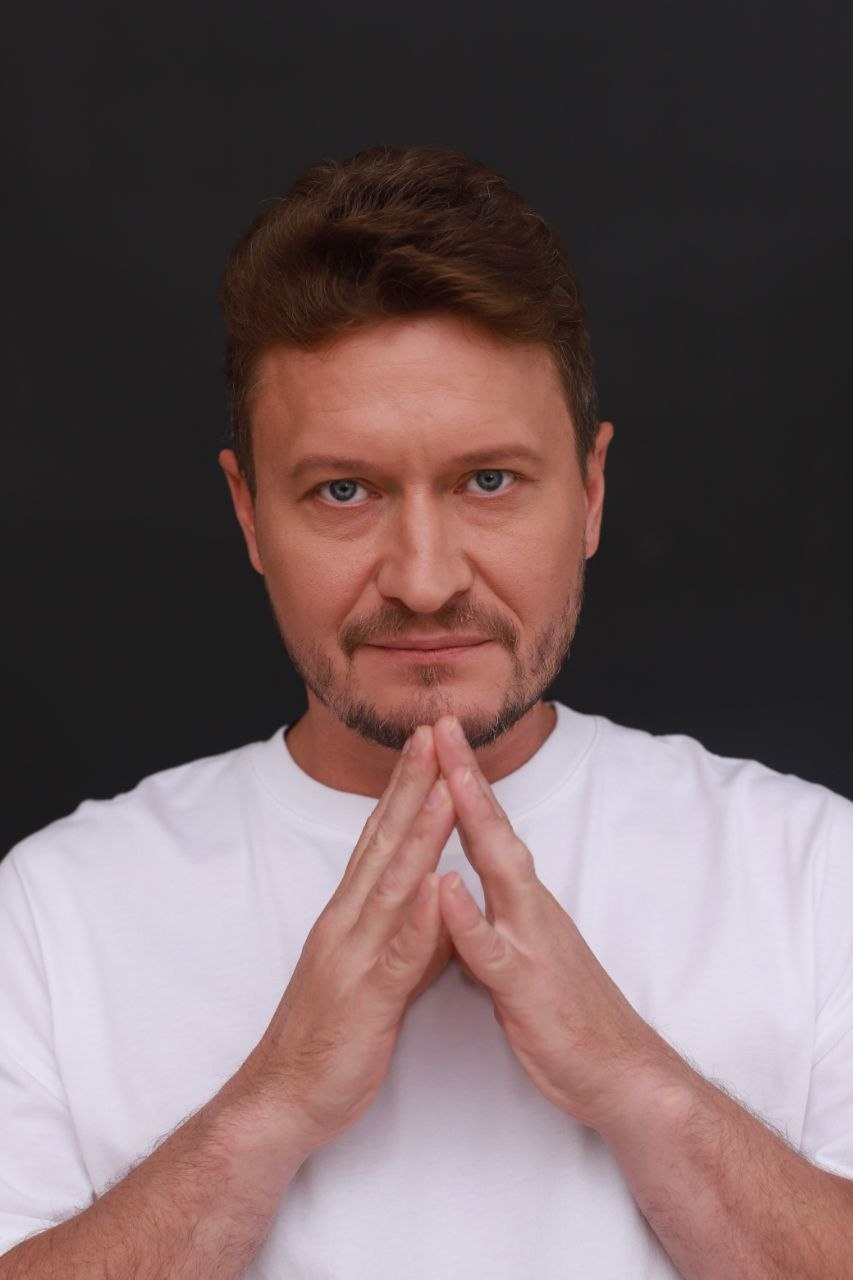
Plastic Surgeon — Gleb Igorevich Tumakov

